

This blog is about:
The true meaning of detachment
Difference from indifference
Stories and analogies
Starting small in daily life
Often confused with indifference, detachment is a hallmark of the spiritually evolved being. It allows us to be fully involved in love, work, and family, without losing the greater perspective. In this opening part, Tantra & Yoga teacher Foca Yariv introduces the essence of true detachment, shares two vivid stories, and offers guidance for beginning the practice in everyday life.
By Foca Yariv
The Story of Swami Rama and the Tree
Let me begin with a story that shaped my understanding of attachment. Once upon a time, there was a young yogi named Swami Rama, whose life is chronicled in Living with the Himalayan Masters. He began meditating four hours daily at the age of five. As he studied ancient texts, he kept encountering the same instruction: “You must overcome attachment.” But what was attachment? How did it work? When he asked his master, the master said nothing.
One day, after their meditation in a cave, the master suddenly clutched a tree and shouted, “Rama! Save me! It’s a magical tree that has power over me!” Terrified, Rama tried to pull his master free, tears streaming down his face. Then, just as abruptly, the master let go and continued walking. Confused, Rama asked, “What happened?” The master replied, “You asked about the nature of attachment—that was your answer: it’s us. We create them.”
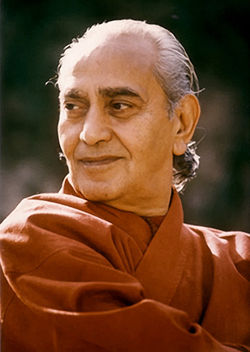
Do you see? The tree was never the captor. The master chose to cling. Attachment is not an external force—it’s a drama we enact in our minds. Detachment is realising we hold the chains, and we can release them.
The Monkey and the Jar: Why We Cling
Let me share another analogy. Do you know how hunters catch monkeys? They place a fruit inside a jar with a narrow neck—just wide enough for the monkey’s open hand to enter, but too small for its clenched fist to escape. The monkey grabs the fruit but cannot withdraw its hand. The solution is simple: let go of the fruit. But the monkey refuses. We’re very much like this: we cannot let go. We cling to relationships, habits, and identities, mistaking attachment for necessity.
False Detachment: The Illusion of Indifference
Now, there’s a false idea about detachment that I must address. Some think detachment means saying, “I don’t care.” That’s not detachment—that’s indifference. Indifference is simply not caring, and that’s fine. For example, some people care about football; others don’t. It’s a matter of affinity.
But true detachment is different. It means deeply caring while not being attached. It’s the ability to participate fully in an act—whether it’s a relationship, work, or family—without clinging to the outcome. This is one of the highest forms of yoga, the foundation of human evolution.
Often, we oscillate between two extremes: attachment and indifference. Both are poles of suffering. Attachment strangles; indifference numbs. True detachment is infused with joy.
Starting Small: The Path to Liberation
We must start with the small things. Practice detachment in daily routines—how you eat, work, or interact with strangers. Gradually, this cultivates the strength to manifest detachment in relationships, family, and friendships.
Society teaches us to create attachments to feel a sense of belonging. We’re encouraged to cultivate relationships where we feel “owned” by someone. But we’re not pets. We don’t need an owner. We need someone to love, yet we create entanglements instead.
For over a decade, I’ve taught people struggling with this exact problem. They either stay alone, fearing attachment, or drown in clinging relationships. In both cases, they suffer. Suffering isn’t a solution for personal revolution. Yes, suffering can trigger growth—it forces us to ask hard questions—but it’s not something to pursue.
So why do we create so many relationships that cause suffering? It’s because we’ve never learned to love without attachment. We’ve never learned to work without seeking rewards. We’ve never mastered the art of being fully involved yet detached.