

This blog is about:
The unifying thread between world religions
Exoteric and esoteric dimensions of faith
Universal spiritual principles
Linking methods and principles
Awakening the spiritual heart
In this first part of the series, Tantra teacher Foca Yariv shares his journey from the heart of Jerusalem to spiritual traditions across the globe. Drawing from Judaism, Christianity, Islam, Hinduism, Buddhism, and Zen, he reveals the hidden layers of religion, the universal principles that connect them, and the transformative power of linking spiritual methods with their underlying truths.
The wisest way to look at world religions is to focus on what connects rather than what divides us. The ancient mystics deliberately hid meanings that have a profound, uplifting and unifying message within specific practices. Tantra teacher Foca Yariv had this realisation in his early life growing up in the Holy City of Jerusalem, as he searched for a common truth among the noise and hubbub of Judaism, Christianity and Islam. Foca has drawn common threads from his knowledge of these spiritual traditions, and in this article, he explores the unifying force between them, and ways in which this force can reinvigorate the yogi on the Tantric path. He begins by talking about the challenge of living at the crossroads of three world religions…
Growing up in Jerusalem, a unique hub of Judaism, Christianity, and Islam, a place where the sacred is woven into the everyday, I could not help but be drawn to exploring the hidden meaning within all spiritual traditions. I would wake to the sound of the Muslim call to prayer, see the Church of the Holy Sepulchre (where Jesus was crucified) from my window, and, walking to school, I would pass by Jews, Christians, and Muslims – everything interwoven into one. These early experiences planted in me a curiosity: beneath the surface differences, might there be a common spiritual truth uniting them all?

Over the years, this question guided me through diverse spiritual traditions, from the Kabbalah of my Jewish roots to Christianity, Islam, Buddhism, Hinduism, and the Zen tradition. Along the way, I discovered a recurring theme: the wisdom hidden within these spiritual paths points not to separation but to unity. And as a Yoga and Tantra teacher today, my purpose is to help others uncover this unifying essence—an essence that transcends dogma and speaks directly to the heart.
The Hidden Layers of Religion
My journey began at age 15, when my mother brought home a copy of the New Testament, which she found on a bus bench. As I read it, I thought that this man, Jesus, sounded quite interesting. It was a moment of realization: my Jewish identity did not invalidate the truths of other religions. Driven by a hunger for deeper understanding, I immersed myself in Kabbalah, the mystical tradition of Judaism, then went on to study Christianity and Islam at university. Later, I travelled to India, exploring Buddhism, Hinduism, Yoga and Tantra, meeting a variety of spiritual teachers who embodied the universal wisdom I sought.
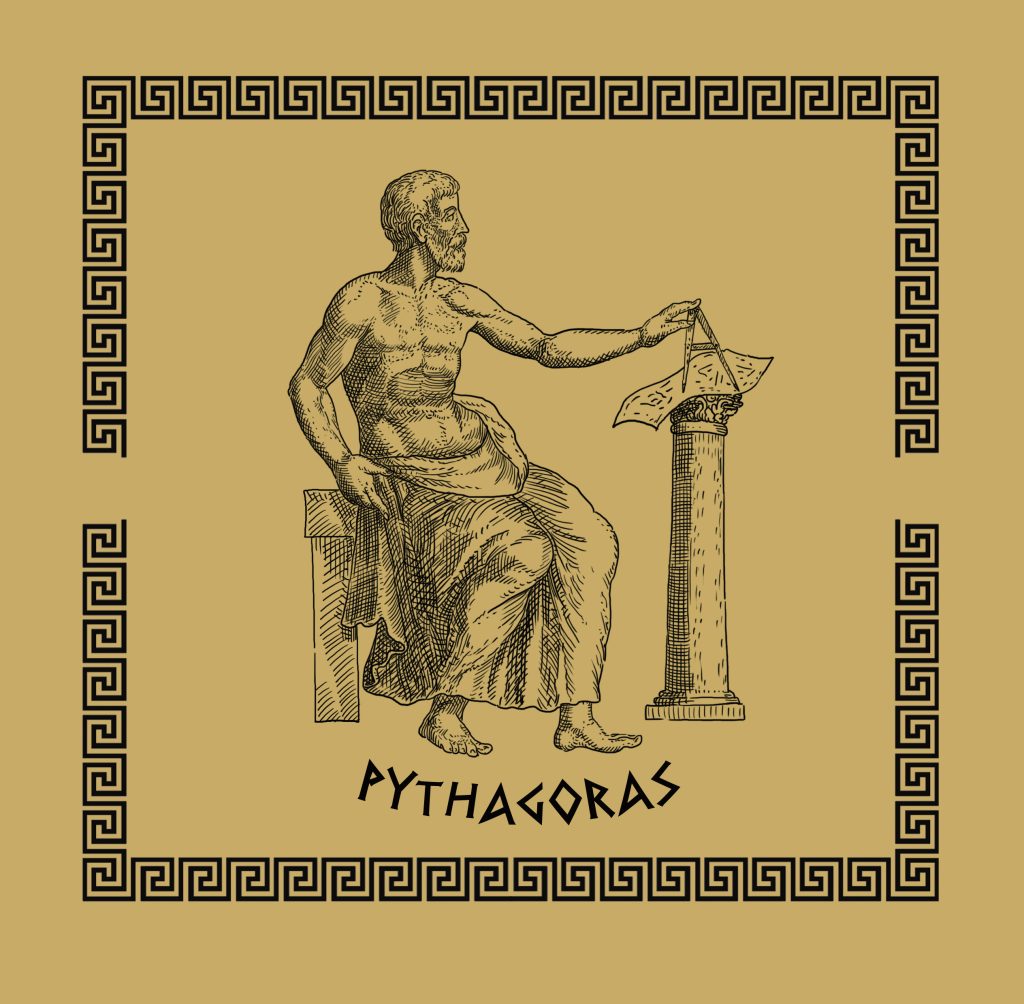
What I learned along the way is that every religion has layers. Pythagoras described this structure as: the exoteric, the outer teachings meant for everyone; the esoteric, the intermediate teachings for those with deeper interest; and the esoteric, which is the essence of that specific spiritual path or tradition – the innermost core reserved for those who have this mystic zeal and thirst for the highest truths. In the exoteric approach to religions and traditions, they seem quite different from one another – this is why they seem to so often be in conflict. When you look at the esoteric aspect however, you find less and less of the differentiation, less and less of the antagonistic relationship between religions. Instead, you find more and more of the unifying factor. And that is exactly how Huxley described it in great depth by way of perennial philosophy – it’s a wisdom that transcends the boundaries of culture and tradition.
Take, for example, the words of Jesus, who told his disciples that he spoke in parables to the crowds but revealed the “secrets of the kingdom” to them. Similarly, in Islam, the Sufi path seeks to unveil hidden meanings beyond the surface of the Qur’an. And in Kabbalah, the Torah is seen as a text layered with mystical truths waiting to be uncovered by the initiate. Across traditions, the esoteric dimension reveals something extraordinary: a shared wisdom that unites all paths.
Universal Principles and Practices
There are numerous foundational principles that underpin our spiritual traditions. Among them are the principle of oneness, the principle of polarity, the principle of the spiritual heart, and the principle that all elements are imbued with consciousness. Some of these universal truths are beautifully articulated in texts like The Kybalion, which draws upon the ancient wisdom of Hermes Trismegistus. Together, these principles form a rich tapestry of knowledge that serves as the bedrock for our spiritual traditions. In my workshops on the Unifying Factor Behind All Religions, my goal is to focus on a single principle and delve deeply into its underlying mechanism. By providing practitioners with a clear understanding of how the mechanism works, they can then extrapolate this understanding to other areas of their lives and practice. For instance, consider the practice of being in a loving relationship. It is not merely something one does—it is an ongoing practice. When you understand the principle at its core—such as the principle of polarity or the essence of love—you begin to approach the practice in a profoundly different way. This deeper comprehension transforms how you relate to the method itself, offering a richer and more meaningful perspective that connects to the principle. The essence is the ability of connecting methods and principles to create efficacy in the heart of the practitioner.

Another unifying principle is the spiritual heart. The heart is revered across traditions as the seat of divine connection. Sufi dervishes whirl in ecstatic dance to awaken their hearts to God’s love and to become aware how the heart is the meeting place of Heaven and Earth. Christians recite the Jesus Prayer, a meditative practice that opens the heart to divine grace. In Kabbalah, meditations focus on the heart as the centre of spiritual awakening. Though the methods differ, the goal is the same: an awakened heart that experiences unity and love.

Often, we engage in practices without fully understanding the reasoning behind them, and we approach principles in a purely philosophical manner. However, when principles remain abstract and philosophical, they lose their transformative power. Similarly, a method practiced without an understanding of the underlying principle is limited in its effectiveness.
The key to meaningful spiritual progress lies in the ability to connect methods with principles. This correlation forms the foundation of true transformation. This is why I strive to illuminate the link between principles and practices across various traditions—so it becomes clear to practitioners. By doing so, they can move beyond simply following a method and instead ask, ‘What is the principle at work here? How does it manifest in my life?’ It is this understanding—this bridge between principle and method—that gives real power and efficacy to any spiritual practice.
The Importance of Experiential Understanding
What I hope to offer is not just wisdom but tools—methods that help people connect to universal principles in a way that resonates with their unique path. Tantra, the tradition closest to my heart, is particularly adept at this because it is inherently non-dogmatic. Rather than converting anyone to a particular faith, my aim is to help practitioners deepen their own spiritual practices, whatever those may be.
For instance, in a workshop, I might introduce participants to the Sufi whirling dervish dance. To a Jew or Christian, this practice might initially seem foreign, even uncomfortable. But when they understand the principle behind it—awakening the spiritual heart—they often see parallels in their own traditions. This recognition dissolves barriers and fosters a sense of unity.
The goal is not to master these methods but to understand their underlying principles—such as oneness, polarity, or the interconnectedness of all things. Once we grasp these principles, we can apply them to any aspect of life, from prayer to relationships, in a way that feels authentic and transformative.
by Foca Yariv