
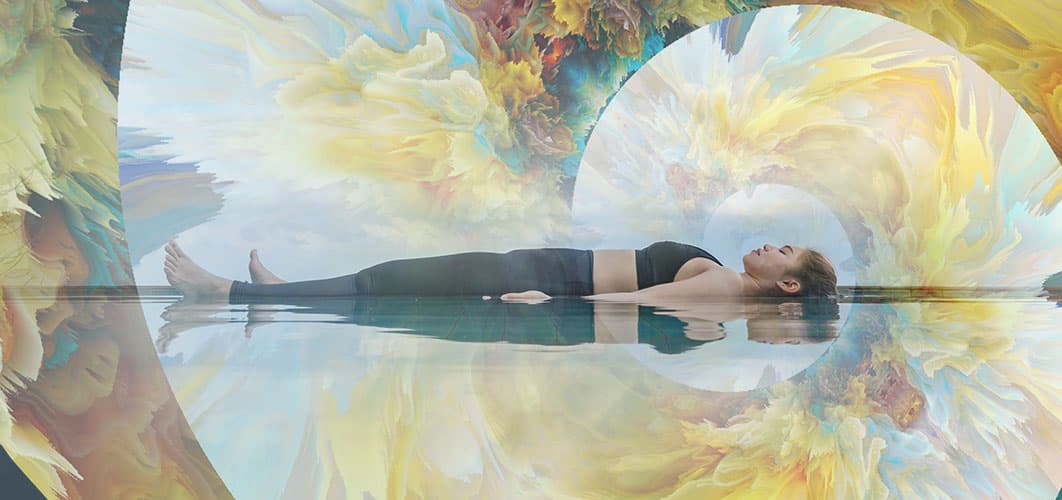
This blog is about:
Psychological development through lucid dreams
Affirmations and intentions
The waking state
Astral plane – another dimension
Out of body experiences
Spiritual connections
Yoga Nidra as a practice for lucid dreaming
In Part 2 of this exploration into lucid dreaming, Morgan moves on from the basics he covered in Part 1, and now delves into the profound advantages, spiritual connections, and how you can truly integrate this practice into your life.
The advantages of controlling your dreams
There are many advantages. We can start with the approach from just a human psychology point of view, just understanding how does the human being work and what is the cause of or what’s behind our behaviour. There have been studies that have looked at it from that point of view. And then also from the psychiatry point of view of understanding and seeing that if we can become lucid in our dreams, then we can actually understand at a deeper level what’s happening. We can affect our psychological development by being lucid in the dreams. We can maybe face a fear, for example, that is something that we have that causes a lot of anxiety in our life, and then we can actually become conscious, we can face that fear in the dream and we can resolve that issue. So there can be actually quite a lot of emotional and mental healing that could be the result of lucid dreaming. So this is the first effect or benefit of doing it, which would be psychological development, emotional well-being.
There’s some research that’s been done recently where they’re looking at actually developing skills in the dream world. So the idea that you can do a kind of training while you’re dreaming, and that that can actually affect your physical performance.
Say for example, if you wanted to improve your ability to get shots in as a basketball player, and you woke up in your dream and your were constantly shooting that basketball into the net. Well, the studies show that you could actually translate that into an actual match. People who do a kind of training and get control—so you need a certain amount of lucidity in the dream to be able to stay there and continue to shoot hoops with a basketball—and if you do have that control, it’s shown that in your daily life your physical performance can be improved.
So imagine that. What they’re proposing now is that we could even undergo forms of training for a life skill. We have all sorts of training for our business, for our work, for our careers, for the hobbies and sports that we might pursue, and we could undergo some of that training in our dream. And just think about it: the ordinary human being is asleep for 26 years of their life. That’s a lot of time. And from one perspective, you could say that’s time wasted. Now just imagine if we could gain some of that time and we could use it constructively. We could develop skills, we could heal things, we could even acquire new knowledge and learning. And that would be an extraordinary thing, and that’s exactly what is proposed by lucid dreaming and is even shown through studies to be the case.
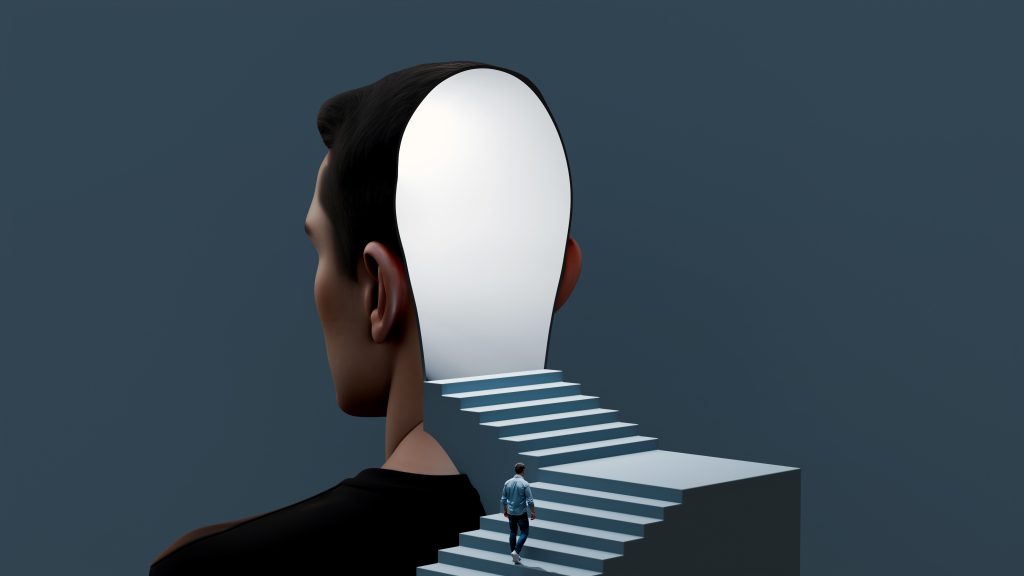
Acquiring new knowledge
So, how could we acquire new knowledge while dreaming? Would it be a case of simply asking a question before we go to sleep and passionately, intensely wanting the answer? Well, that is actually one of the ways that it can be done. Our dreams are very much influenced by what we do right before we enter the dream state, so right before we go to sleep. So a lot of the practices are about setting intention before you go to sleep, even using affirmations. Things like “I am conscious of my dreams,” “I enter my dreams consciously and I remember them fully when I awake,” or “Tonight I’ll remember my dreams and I will be aware that I’m dreaming and I’ll take control of the dream world.” These kind of affirmations and intentions that you set before you go to sleep can greatly affect the dreams that you have, and your chances of becoming lucid. And if you give them an orientation, then there’s a good chance that you can have a result in that dream that will correspond to that direction that you give in the waking state.
To give you an example of that – when it’s done more unconsciously: if you were to watch a movie right before going to bed, maybe you’re into martial arts and you’re watching four hours of martial arts movies, there’s a good chance that in your dream you’re going to be doing some martial arts. So you’ve somehow given your dreams a direction. But imagine if you could say “I want to learn about this aspect,” then perhaps in your dream you might meet a character and that character starts to tell you a story or to give you information about that. And that’s very exciting.
Connection to death and dying
So With regards to death, we could, in a lucid dreaming state, decide to meet people, loved ones who’ve died. Or we might meet somebody who is suffering and then see them on the astral plane as being perfectly healthy and well, which would be very touching. And that could go a long way to healing some kind of sadness that you might have over someone’s passing. Having a confirmation that a part of them still exists and that they are okay, and even the fact that you could communicate with them, that’s a very comforting and reassuring experience.
The more people get used to being on this other dimension, being awake in the astral plane, this helps when they think about dying, passing on, losing their physical body. This is actually where we could take some of the perspective from the Yoga tradition. Because in that tradition, they believe that this place that we go to when we’re dreaming is not just a projection of the mind, but it is actually another dimension, a dimension that is as real as this physical dimension that we live in. And that going into that state consciously, we are entering another world and we can explore that dimension and we can learn to become more familiar with it. That’s what they call the astral dimension.
And so when we leave the body in the moment of death, then we are entering into these astral dimensions, into some other more subtle dimensions. So if we’re familiar with it while we’re still alive, then that might familiarize ourselves with the process of dying. We could even be more conscious in that process. And that sounds like an extraordinary thing to do, but this is indeed what the yoga tradition says is possible: that there is a way of leaving the body consciously. And of course that would require great awareness of those dimensions, and it would require a skill of being able to stay awake and stay aware while you pass through those other dimensions.
Discovering your authentic self
This brings us to connection to source and discovering your authentic self. This is an integral part of what we are as multi-dimensional human beings. We have the physical body that we’re all very familiar with, and we’re so familiar with exploring the physical dimension mainly through our senses and through our perceptions. But that’s just one part of us. The next part of us is our astral body. And we could say that to a certain extent this is more real in some ways. Having awareness of both the physical body and the astral body brings us to a greater awareness of what we are.
And then of course, there are deeper levels of ourselves going to the super-mental bodies and the causal bodies, and even the Divine spark that’s within each of us: the spirit, the soul, the consciousness that is at the fundamental level of who we are as conscious beings. So when we start to get lucid and explore that astral world, then it’s bringing us closer to those more subtle dimensions of our being, and bringing us closer to what we truly are.
How out-of-body experiences are connected to Lucid Dreaming
An out-of-body experience is when we are awake and we do some kind of technique to consciously project ourselves, our mind, into the astral dimension. So it’s similar to lucid dreaming, but you’re starting from the waking state and you’re doing a conscious projection of the mind, whereas lucid dreaming is something that you enter during the dream state and you’re waking up into the dream, and then you are entering a similar dimension, but the way you access it is differently.
Out-of-body experiences can also happen via some shocking experience. Often people experience that in an accident, or some kind of exceptional experience where they are forced to focus very intensely, and then they suddenly find themselves outside of their body looking down on their physical body. And very often that’s quite a scary experience when it happens. But yeah, they are out-of-body experiences. So they’re different ways of accessing those subtle dimensions.

My personal experiences
Before I learned about Yoga and Tantra and the reality of these kinds of dimensions and that such a thing was possible, I had an experience where I was focusing upon a sound, a physical sound, and I was trying to see how long I could hear that sound as it got quieter and quieter. Actually, it was getting more high-pitched, and with each increase in pitch I had to focus even more powerfully to try and hear the sound. And at a certain moment, due to that very intense concentration, I just suddenly found myself outside of the building that I was in, looking down on the building and just kind of floating in some strange dimension. And of course, it was very frightening and shocking, and I immediately pulled myself back into my body. And I had no idea what that experience was. But later I came to learn that that’s just a standard kind of out-of-body experience. And from there I started to get interested in lucid dreaming and exploring it and having a whole wide range of experiences. Sometimes, not so much frightening, but exhilarating, and other times, really blissful experiences.

The Role of Yoga Nidra
Yoga Nidra is a branch of yoga which ultimately is teaching us to separate the consciousness from the body. We are so much identified with the physical structure that we don’t even feel that we exist outside of the waking state. Think about it, when we go to sleep it’s just like we’re very unconscious in that process. First of all, you go into this deep sleep where you have absolutely no recall of what took place; it’s just blank. If you think about those moments, it’s a complete blank, it’s like you don’t exist in those moments.
Well, Yoga Nidra trains us to shift from the waking state to the dream state consciously. So it’s training us to be to remain aware while we shift from one state of consciousness to another. Often, yoga nidra is mistakenly thought of as just some alternative relaxation exercise, because very often you’re laying down, you’re doing it in a very relaxed state, and it’s often just taught as some kind of advanced relaxation. But in fact, it’s an entire branch of yoga that is teaching us to go consciously through different states of consciousness, or to be aware as we shift from one state to another. So if you can do that from the waking state to the dream state, then you can be fully awake in the dream world. So yeah, this is a great training for becoming lucid in the dreams and for consciously projecting in the astral worlds.
You get to know your mind extremely well, to point it in directions that you would like it to go, as opposed to being a victim. That’s where the control element comes in. Because until you have control, you’re just a character in something that’s unfolding. Think about your dreams, all sorts of crazy stuff is going on there. You’re in a car and all of a sudden that car turns into a horse and then it dissolves, and then you’re standing on a beach, and then the next thing you know you’re talking to someone and they turn into a tree. All these bizarre things happen in your dream. And then you meet someone who you recognize and then you start talking to them and they turn into someone else. And you wake up just like, “what was that?” You’re having these very bizarre experiences. So yeah, they don’t mean a lot to us when it’s like that. But when we get control, they start to be much more significant.
The first stage is when we start to wake up feeling different from the kind of dream that we had, and then to even go to that next step where you think that “this is something that I can have control of, I can exert my will in this, I can have the kind of experience that I want, I can actually choose the experience that I have while I’m dreaming.” That’s an extraordinary thing to be able to do.
Getting Started
So, where can you go to learn these techniques, and does it take long to master them? The best way to do it is to do some kind of training course, like a workshop or some training in lucid dreaming. Because it’s very good to immerse yourself into the idea of lucid dreaming. Actually one of the ways that you can even be better at lucid dreaming, or to even start the lucid dreaming experience, is simply by listening to other people’s experiences or reading about them. So reading about them is a great way to start as well, and then getting the theory behind it, like understanding what’s actually happening, to hear that it is proven and shown scientifically that this is a real phenomenon, that this does actually happen. And then to get deeper perspectives, such as the ones coming from the yoga tradition, that show that this has been something that’s been explored for thousands of years and there’s a huge body of knowledge that supports lucid dreaming.
Yogis already on the spiritual path
My advice to Yogis already on the spiritual path, my advice is, start trying to lucid dream. Start gaining some of that wasted time. That time that we lose every day, we lose a third of our day just being unconscious. And of course we need sleep to regenerate the body and to go through all sorts of healing and realignment and harmonizing of our being. But there’s a great deal of time that we could gain and we could use. Imagine if you’re a yogi and you could use that time to meditate—that would be amazing. You could do your meditation practice. You could all of a sudden double your meditation practice. Or you could do yoga postures, and you could do those difficult yoga postures that you can’t do in the physical dimension; you can actually perform them in the astral.
That’s actually one of the more remarkable experiences that I’ve had personally, is when I was able to start using mantras in the dream world, mantras that I’m using in my daily meditations. And that was an extraordinary experience. So from the point of view of a yogi, you could double your practice time just by gaining some of this time that we would normally spend in an unconscious state dreaming. And that’s pretty exciting. Or even more, we could meet enlightened beings, we could meet spiritual Masters, and we could get guidance from them, we could get teaching from them. So we could just continue our spiritual pursuits in the astral world.
Meeting people you know in the astral world
Through lucid dreaming, you can enter the astral realms and meet people you know, which is a wonderful experience. And it’s even a way that you can validate your dream experience. You can plan to meet with a friend and at a certain time, you can set your alarm clocks to wake up and then go back into the dream state and try to consciously meet one another. That’s a really wonderful way of practicing lucid dreaming.
Another extraordinary application of lucid dreaming is to meet your lover in the dream and to have erotic experiences—astral love-making, as it’s called. Perhaps you’re separated by distance from your lover, and you could actually meet them in the astral world and have wonderful, sublime erotic experiences together. This is a very extraordinary application of lucid dreaming.
*by Morgan Arundel